
Tawi Lodge — Complete Safari Lodge Guide: Rates, Rooms & What to Expect
Tawi Lodge is a privately-owned luxury safari lodge set within the private conservancy bordering Amboseli National Park. It has earned a strong reputation for combining exclusive wildlife access — including night drives and guided walks not permitted inside the national park — with exceptional views of snow-capped Mount Kilimanjaro. For travellers asking whether Tawi Lodge is worth it, the short answer is yes: it offers a more private and versatile Amboseli experience than most lodges inside the park boundary.
Key Takeaways
- Location: Tawi Lodge sits within the private conservancy bordering Amboseli National Park. Conservancy activities and convenient access to Amboseli, subject to park fees and regulations.
- Accommodation: 12 standard cottages, one Family Cottage and a two-bedroom Luxury Suite — all thatched, brick-built, and spaced for privacy.
- Rates: From approximately USD 567–859 per person per night (fully inclusive), depending on season — peak rates apply July through October during Kenya’s prime wildlife season.
- Signature experience: Resident elephant herds passing the in-ground waterhole daily, often framed by Kilimanjaro clearing in early morning light.
- Exclusive activities: Night game drives and guided walking safaris within the conservancy — both prohibited inside Amboseli National Park itself.
- Wildlife: Big cats (lion, leopard, cheetah), elephant, buffalo, giraffe, zebra, and 400+ bird species across the conservancy and park.
What Is Tawi Lodge and Where Is It Located?
Tawi Lodge is an independent, owner-managed luxury safari lodge in the Amboseli ecosystem of southern Kenya, roughly 240 km southeast of Nairobi. It is not inside Amboseli National Park but rather on a private conservancy adjacent to it — a distinction that matters enormously for the quality and variety of your safari experience.
The lodge sits within the Kilitome Conservancy, a 6,000-acre (approximately 24 km²) private wildlife reserve managed in partnership with the African Wildlife Foundation and the local Maasai community. This model — community partnership combined with private conservation — means the land around the lodge is actively managed for wildlife, with Maasai landowners benefiting directly from tourism revenue.
The location, just 5 minutes from the Kimana Gate, gives Tawi guests easy daily access to the national park’s famous open plains, swamps, and big-tusker elephant sightings. But unlike lodges physically inside the park, Tawi’s conservancy setting allows activities the park prohibits: night drives, guided bush walks, and sundowner stops in the bush. This flexibility makes Tawi particularly valuable for experienced safari travellers who want a richer, more varied daily programme.
Amboseli National Park covers approximately 392 km² at its core but sits within a much larger ~8,000 km² ecosystem. The park was established in 1974 and is Kenya’s second most-visited park after the Maasai Mara. Its name comes from a Maasai word meaning “salty dust,” a nod to the dry, alkaline lake beds that dominate its open terrain. Underground springs fed by Kilimanjaro’s snowmelt create permanent swamps that draw enormous concentrations of wildlife year-round — and Tawi Lodge is positioned precisely at this intersection of park and private land.
What Are Tawi Lodge Rates?
Tawi Lodge rates are fully inclusive — covering accommodation, all meals, selected beverages, and standard activities including game drives both in the park and on the private conservancy. Rates vary significantly by season, with peak pricing applying during Kenya’s best wildlife months.
| Season / Period | Rate (per person sharing) |
|---|---|
| Low season (Apr-May, Nov) | from USD 540–567 per night |
| Mid season (Jan-Mar, Jun, Dec 1–20) | from USD 718 per night |
| Peak season (Jul–Oct, Dec 21–Jan 5) | from USD 859 per night |
Conservancy charges and Amboseli National Park entry fees are additional. Confirm the final quote for your dates and room type.
These rates are per person sharing and are fully inclusive of accommodation, all meals, select beverages, and game-viewing activities. Additional costs that are typically not included: park fees for Amboseli National Park (paid separately charged separately under current KWS rules), optional spa treatments, helicopter excursions, and premium drinks beyond the house selection.
For context, Tawi’s peak rate of around USD 860 per person per night sits at the upper-mid level of the Amboseli market — comparable to &Beyond-affiliated properties and well-appointed tented camps elsewhere in Kenya. It is not at the ultra-luxury price point of Kenya’s most expensive bush retreats (~USD 1,500+ per night), but it is unambiguously a premium product. Families and couples seeking value for money relative to experience quality consistently rate Tawi highly.
A single-supplement applies for solo travellers. Children are welcome; the lodge has a family cottage specifically suited to families with young travellers. Rates should always be confirmed directly with a specialist operator, as pricing can shift with inventory and seasonal promotions.
What Rooms and Accommodation Does Tawi Lodge Offer?
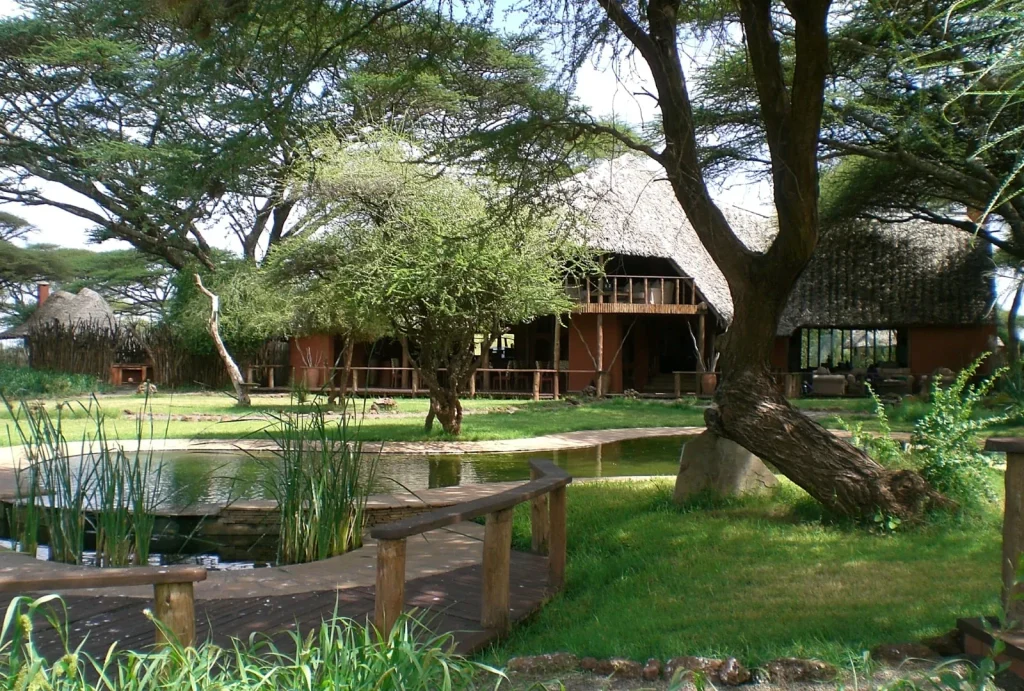
Tawi Lodge has 12 standard cottages, one Family Cottage and a two-bedroom Luxury Suite, and one Family Cottage. All are built in a consistent style — external terracotta render, thatched roofing, and brick construction — and are connected by meandering gravel pathways through the lodge’s lush, landscaped gardens.
The guest cottages are the core accommodation. Each is generously sized, with an en-suite bathroom, indoor and outdoor shower options, and a private veranda for private wildlife watching. A distinctive feature: several cottages have front walls made partially of canvas that can be opened fully, blurring the boundary between interior and the African bush. This is not a gimmick — it genuinely transforms the morning experience when Kilimanjaro appears through the cloud as you wake.
Views of Kilimanjaro vary between cottages depending on their orientation within the property. Guests who specifically want the mountain view should mention this preference when booking — a specialist operator can flag which cottages are best positioned. The mountain typically clears most dramatically in the early morning (before 09:00) and occasionally again at dusk after afternoon cloud burns off.
The Luxury Suite is a two-bedroom option ideal for couples travelling together, or for a family wanting a private, self-contained space. The Family Cottage is designed specifically for families with children, with the layout and extra beds needed for a comfortable family stay.
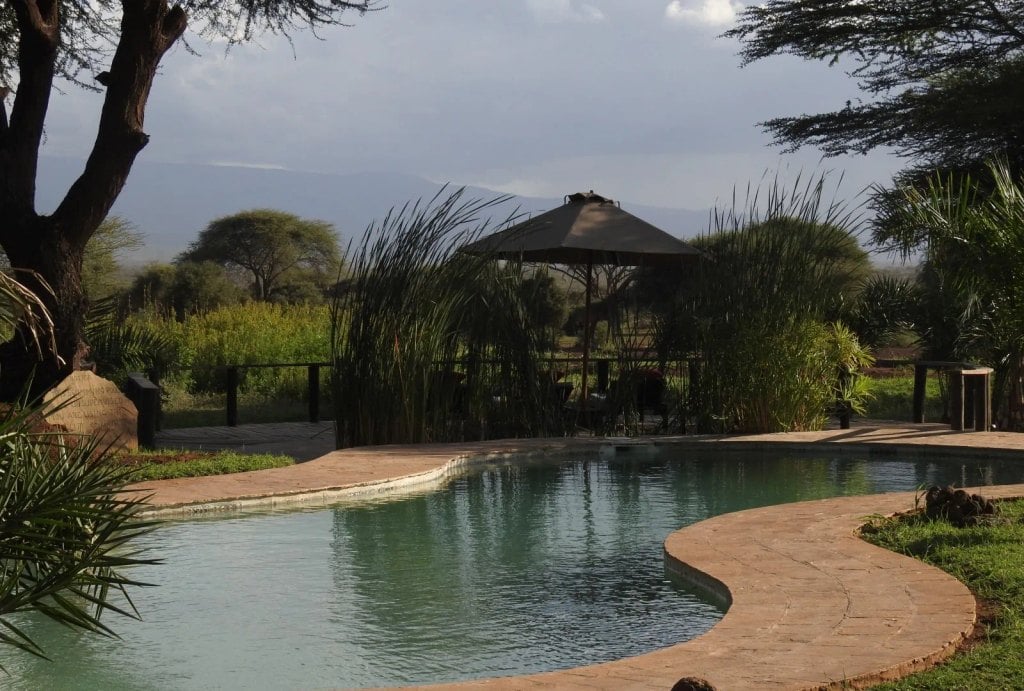
The central lodge building is a large, thatched two-storey structure housing reception, a bar and lounge, the dining room, and a gift shop. The upper level has a viewing deck with comfortable sofas and a small library — a genuinely useful spot for Kilimanjaro spotting with a morning coffee. Outside, a covered veranda serves as the main dining area. The gardens surrounding the main building are exceptionally well-maintained, with indigenous plantings, ponds, and flowering shrubs that attract remarkable bird life. A swimming pool (with a separate children’s pool) overlooks a natural waterhole that draws elephants, zebra, and other wildlife throughout the day.
What Wildlife Can You See at Tawi Lodge?
The Amboseli ecosystem supports approximately 1,800 elephants — one of the largest free-ranging elephant populations in East Africa, studied continuously since 1972 in one of the world’s longest-running elephant research programmes. Tawi Lodge’s private waterhole reliably draws these elephants throughout the day and night, often in large family groups. This alone distinguishes the lodge from many safari destinations where elephants are spotted at a distance on a game drive; at Tawi, they come to you.
Beyond elephants, the Amboseli ecosystem supports lion, leopard, cheetah, buffalo, giraffe, zebra, wildebeest, impala, gazelle, and hippo. The park’s permanent swamps — fed by Kilimanjaro’s underground meltwater — attract hippos and large concentrations of waterbirds year-round. Black rhino are present in small numbers within the greater ecosystem, though sightings are rare and not a defining feature of an Amboseli safari.
The Kilitome Conservancy adds a dimension beyond what the park alone offers. Guests on the conservancy can do:
- Night game drives — spotting nocturnal species (African civets, genets, nightjars, aardvark, and predators on the move) that are simply invisible on daytime park drives.
- Guided walking safaris — interpretive bush walks with experienced Maasai rangers that cover ecology, tracking, and the smaller details of the landscape that a vehicle always misses.
- Cultural visits — engagement with the Maasai community whose land forms the conservancy, with authentic (not staged) interactions about pastoral life, bead work, and the Maasai relationship with wildlife.
Birdwatchers will find Amboseli exceptional: over 400 species have been recorded in the ecosystem, including African fish eagle, saddle-billed stork, lesser and greater flamingo (on the soda lake), martial eagle, secretary bird, and an impressive range of raptors. The lodge gardens themselves attract species not easily seen in the park, including small, shy forest-edge birds drawn to the planted vegetation and water features.
How Do You Get to Tawi Lodge?
Tawi Lodge is accessible by scheduled flight, charter flight, road, or a combination of rail and road transfer — making it one of the more flexibly accessible lodges in the Amboseli region.
- By scheduled flight: Daily scheduled services operate from Nairobi’s Wilson Airport to Amboseli Airstrip (approximately 45 minutes flying time). Tawi Lodge can arrange transfers from the airstrip.
- By charter flight: Tawi has its own private airstrip within the conservancy, allowing direct charter arrivals — the most seamless option for guests coming from the Maasai Mara or other Kenyan safari circuits.
- By road: The drive from Nairobi takes approximately 5 hours via the Namanga Road (A104). This is a viable option for those combining Amboseli with time in Nairobi, though road conditions can vary.
- By SGR train + road transfer: Kenya’s Standard Gauge Railway (SGR) runs from Nairobi to Emali Station, from where Tawi Lodge provides a road transfer of approximately 2 hours. This is a scenic and increasingly popular option for environmentally conscious travellers.
Tawi Lodge is most commonly visited as part of a Kenya safari circuit combining Amboseli with the Maasai Mara (the wildebeest migration, July–October) or Samburu (for the northern specialist species). A 2–3 night stay at Tawi is typical as part of a 7–10 day Kenya itinerary.
What Is the Best Time to Visit Tawi Lodge?
Tawi Lodge is open year-round, and Amboseli’s permanent water sources mean wildlife viewing remains productive in all seasons. That said, the experience changes meaningfully across the year.
| Period | Conditions | Best for |
|---|---|---|
| January–February | Dry, clear skies, low grass | Kilimanjaro views, elephant calves, photography |
| March–May | Long rains — wetter, green | Low rates, lush landscape, fewer visitors |
| June–October | Dry season — peak game viewing | Concentrated wildlife, best predator activity |
| November | Short rains — brief, usually afternoons | Green scenery, discounted rates |
| December | Short rains may continue; conditions vary | Good all-round experience, festive season atmosphere |
The peak season of July through October combines Amboseli’s dry-season wildlife concentration with Kenya’s Great Migration season in the Maasai Mara — making it the most popular time to visit East Africa overall. Booking 6–12 months ahead is strongly recommended for peak season stays at Tawi Lodge.
January and February offer outstanding Kilimanjaro clarity (the mountain is often cloud-free for extended periods), abundant baby animals (elephant calves born in the previous months), and relatively lower crowds compared to the July–October peak. Many specialist safari operators consider January–February an underrated sweet spot for Amboseli.
Is Tawi Lodge Good for Families?
Yes — Tawi Lodge is well-suited to families with children, with a dedicated Family Cottage, a children’s swimming pool, and a relatively relaxed, spacious property that doesn’t feel intimidating for younger travellers. The Amboseli elephant experience — watching large herds at the waterhole — is one of East Africa’s most genuinely child-friendly safari spectacles, because it requires no early starts or long drives. The animals come to the lodge.
Families with older children (subject to the lodge’s minimum-age and safety requirements) can join guided walking safaris within the conservancy, which are educational and engaging without the intensity of higher-adrenaline wilderness experiences. The Maasai cultural visits are also particularly memorable for younger travellers — a meaningful encounter with a way of life entirely different from their own.
It is worth noting that Amboseli is a malaria zone — consult a travel health professional about suitable malaria prevention for adults and children. This differentiates Amboseli from malaria-free safari destinations like South Africa’s Eastern Cape, Madikwe, or Pilanesberg — though for most healthy travellers, the risk is manageable with appropriate precautions.
How Does Tawi Lodge Compare to Other Amboseli Lodges?
Amboseli has a range of lodges, from large, mainstream properties inside the park to small, exclusive camps on private conservancies. Tawi sits clearly in the upper-mid to premium tier — more personal and wildlife-focused than the larger lodge properties, less ultra-exclusive (and expensive) than the smallest, most remote tented camps.
| Feature | Tawi Lodge | Larger park lodges | Ultra-luxury tented camps |
|---|---|---|---|
| Size | 12 std cottages + 1 Family Cottage + 2 suites (intimate) | Often 50–100+ beds | 4–8 tents (very exclusive) |
| Night drives | ✅ Yes (conservancy) | ❌ Not permitted in park | ✅ Yes (if on conservancy) |
| Walking safaris | ✅ Yes (guided) | ❌ Generally no | ✅ Yes |
| Kilimanjaro view | ✅ Strong (waterhole aspect) | Varies | Varies by property |
| Rates (approx.) | USD 540–860 pps/night | USD 250–500 pps/night | USD 900–1,500+ pps/night |
| Family-friendly | ✅ Yes | ✅ Generally yes | Often age restrictions apply |
Tawi’s private airstrip and conservancy setting genuinely elevate the experience above most park-boundary properties. The night drives and walking are not a minor add-on — they are transformative, especially for repeat Africa travellers who have done the standard dawn-and-dusk park drive many times.
Frequently Asked Questions About Tawi Lodge
What is Tawi Lodge known for?
Tawi Lodge is best known for its combination of exclusive Amboseli National Park access and private conservancy activities — particularly night game drives and guided walking safaris — that are unavailable inside the park itself. The lodge is also celebrated for its daily elephant encounters at the waterhole and its Kilimanjaro views, which are among the most photogenic in the Amboseli ecosystem. Opened in 2009, it is recognised as one of the most professionally run independent lodges in the region, with consistently high traveller satisfaction ratings.
How many rooms does Tawi Lodge have?
Tawi Lodge has 12 standard cottages, one Family Cottage and a two-bedroom Luxury Suite. All are built in a thatched cottage style and connected by garden pathways. The property accommodates a maximum of around 30 guests, giving it a genuinely intimate feel compared to larger lodges in the Amboseli area.
What is included in the Tawi Lodge rate?
The fully inclusive rate at Tawi Lodge covers accommodation, all meals (breakfast, lunch, and dinner), selected beverages (house wines, local beers, soft drinks, tea and coffee), and standard game-viewing activities including game drives on the private conservancy and into Amboseli National Park. Not typically included: Amboseli National Park entry fees (charged per vehicle entry), premium spirits, spa treatments, helicopter excursions, and laundry. Always confirm exactly what is included when booking.
Is Tawi Lodge inside Amboseli National Park?
No — Tawi Lodge is not inside Amboseli National Park. It sits on the Kilitome Conservancy, a 6,000-acre private wildlife area located 4 km from the park’s Kimana Gate. This distinction is advantageous: guests have full access to the national park on daily game drives, plus exclusive conservancy activities (night drives, guided walks) that the park does not permit. The lodge’s private airstrip and conservancy setting create a more exclusive, flexible experience than lodges physically inside the park boundary.
When is the best time to visit Tawi Lodge for elephant sightings?
Elephant sightings at Tawi Lodge are excellent year-round — the Amboseli ecosystem supports approximately 1,800 free-ranging elephants, and the lodge’s waterhole draws herds throughout the day regardless of season. That said, the dry season months of June through October concentrate wildlife around water sources and typically offer the most dramatic sightings. January and February are also outstanding — clear skies give the best Kilimanjaro backdrops for elephant photography, and newborn calves are often present from calving that began in the preceding months.
Is Tawi Lodge worth the price?
For travellers who want more than a standard park-based lodge experience, Tawi Lodge represents good value at its price point. The combination of private conservancy activities (night drives, walking), intimate accommodation, professional service, and consistent Kilimanjaro and elephant access is hard to replicate at lower price points in the Amboseli market. Expert Africa rates it very highly based on 16 verified traveller reviews with a 95% positive rating. Travellers who want the cheapest possible Amboseli base will find larger, more modest lodges for less — but those willing to invest in a more rounded experience consistently find Tawi delivers.
How do I get to Tawi Lodge from Nairobi?
The fastest option is a scheduled or charter flight from Nairobi’s Wilson Airport to Amboseli Airstrip (approximately 45 minutes), followed by a short lodge transfer. Tawi also has its own private airstrip within the conservancy for direct charter arrivals. Driving from Nairobi takes approximately 5 hours via the Namanga road. A third option is Kenya’s SGR train to Emali Station, followed by a 2-hour road transfer arranged by the lodge — an increasingly popular and scenic alternative to the road.
Does Tawi Lodge have a swimming pool?
Yes — Tawi Lodge has a main swimming pool and a separate children’s pool, both set in the lush garden grounds overlooking the waterhole. The pool area is a particularly pleasant midday retreat when the heat is at its peak and game activity is quietest. The waterhole is visible from the pool area, meaning you can watch elephants and zebra drinking while you swim.
Plan Your Tawi Lodge Safari
Tawi Lodge is best experienced as part of a tailored Kenya safari itinerary — paired with the Maasai Mara for the wildebeest migration, combined with Samburu for northern Kenya’s specialist species, or built into a broader East Africa circuit including Tanzania’s Serengeti or Ngorongoro. A typical Amboseli stay is 2–3 nights. African Safari Group (ASG), a specialist luxury safari operator with deep Kenya destination knowledge, can design a Kenya itinerary built around Tawi Lodge and the rest of the Amboseli ecosystem. To enquire about availability, rates, and the best Amboseli itinerary for your travel dates, get in touch with ASG here.