
Amboseli National Park: The Complete Safari Guide
Amboseli National Park Summary (2026 Comprehensive Planning Guide):
Amboseli National Park is a 39,206-hectare UNESCO Biosphere Reserve located in southern Kenya at the foot of Mount Kilimanjaro. Famed for its population of over 1,600 free-roaming elephants (including legendary Super Tuskers with ivory reaching the ground), subterranean freshwater springs, observation hill vistas, and exclusive private conservancies, Amboseli offers one of Africa’s most breathtaking safari panoramas.
Top Amboseli Safari Lodges & Camps Ranked (2026)
| Lodge / Camp Name | Location / Setting | Key Highlight | Rate Tier (pppn) |
|---|---|---|---|
| Tortilis Camp (Elewana) | Kitirua Private Conservancy | Panoramic views of Kilimanjaro; luxury safari tents; private concession night drives | $1,050 – $1,750 USD |
| Angama Amboseli | Kimana Sanctuary | Boutique luxury design; exclusive 5,700-acre private sanctuary; famous big tusker territory | $1,850 – $3,200 USD |
| Ol Tukai Lodge | Inside Amboseli National Park | Front-row seat to central elephant swamps; classic bush chalets & swimming pool | $450 – $750 USD |
| Tawi Lodge | Tawi Private Conservancy | Eco-award winning; private waterhole views; camel walks & night game drives | $850 – $1,450 USD |
Amboseli National Park is defined by one image above all others: elephant herds moving across a dusty plain with the snow-capped summit of Mount Kilimanjaro rising 5,895 metres above the horizon behind them. This view — Africa’s most iconic wildlife photograph — is not a lucky shot. It is what Amboseli delivers on most mornings when the mountain is clear.
Amboseli is 392 km² of southern Kenya — compact, accessible from Nairobi in 4 hours, and spectacularly productive. It has Africa’s most studied elephant population, consistent big cat sightings, and a Maasai cultural dimension that adds human depth to the wildlife experience. For photographers, it is one of the essential Africa safari destinations.
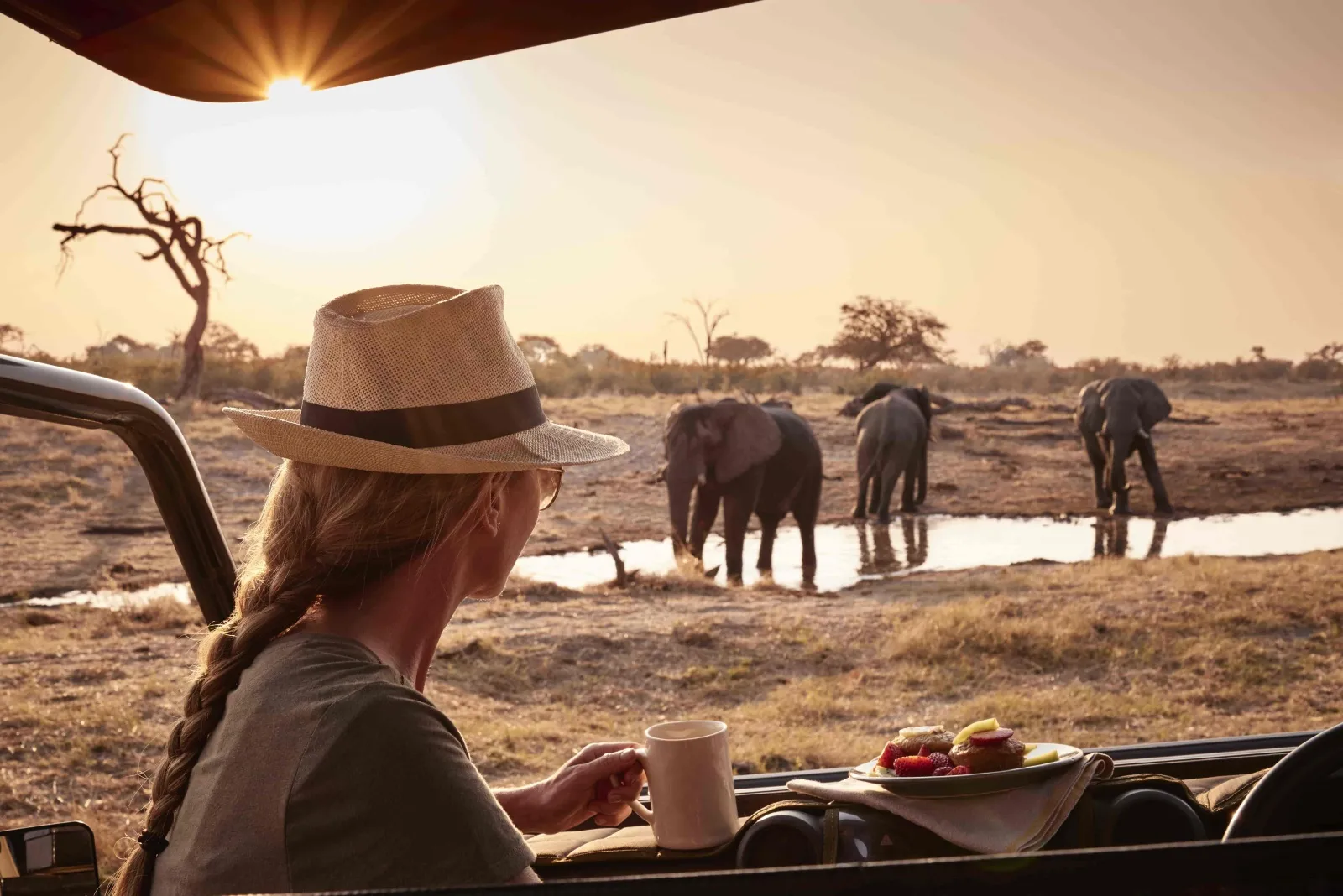
Amboseli at a Glance
- Location: Kajiado County, Kenya — southern Kenya on the Tanzania border, beneath Mount Kilimanjaro
- Size: 392 km² (park) plus surrounding Maasai community lands
- Famous for: Elephant herds against Kilimanjaro backdrop; Africa’s most studied elephant population
- Big 5: Lion, leopard, elephant, buffalo — rhino not commonly resident
- Best time: June–October (dry season) and January–February (dry inter-season) for Kilimanjaro views
- Access: 4-hour road from Nairobi; 45-minute flight from Wilson Airport
The Elephants of Amboseli
The Amboseli elephant population has been studied continuously since 1972 by the Amboseli Elephant Research Project — one of the longest-running wildlife studies in history. The project, founded by researcher Cynthia Moss, has documented the complete life histories of over 1,800 individual elephants across 60+ family groups. Every elephant in Amboseli has a name, a documented family tree, and decades of recorded observations.
This extraordinary research context means guides in Amboseli can tell you which family group you are watching, who the matriarch is, which calves are whose, and what has happened to this specific family over 50 years of observation. No other elephant population in the world is as thoroughly understood.
The elephants themselves are large-tusked relative to many East African populations — Amboseli has historically protected its elephants from poaching, and the resulting genetic expression includes some of the finest ivory (and most impressive tusk displays) of any accessible elephant population.
Sighting reliability: Guaranteed. The Amboseli ecosystem is small enough and the elephant population dense enough that herds are encountered on virtually every game drive.
Kilimanjaro — The Backdrop That Changes Everything
Mount Kilimanjaro is a free-standing volcanic mountain that rises from the Tanzanian plains to 5,895 metres — the highest peak in Africa, 300km from the Indian Ocean, and always present on the southern horizon from Amboseli.
What makes Kilimanjaro extraordinary as a backdrop is its visibility. Unlike most high mountains, which are surrounded by foothills and subordinate ranges, Kilimanjaro rises in near-isolation from relatively flat plains. From Amboseli’s plains, the mountain fills the sky — its glaciated summit clear against blue sky on a good morning.
The best views come in the early morning (before midday clouds typically obscure the upper slopes) and during Kenya’s dry seasons (June–October, January–February) when atmospheric haze is minimal.
Photography note: The classic Amboseli photograph — elephant silhouetted against Kilimanjaro — requires luck as well as location. Kilimanjaro is visible approximately 50–60% of days in the dry season. Morning drives (departing before 6am) consistently produce the clearest mountain views before cloud builds.
Wildlife
Lion
Amboseli’s lion prides are well-established, long-habituated, and regularly encountered. The open plains make sightings straightforward — a lion resting in the Amboseli grassland is visible from hundreds of metres and can be closely approached. Kills and hunting activity are consistent features of game drives.
Cheetah
The open plains of Amboseli are excellent cheetah habitat. Sightings are reliable — Amboseli is one of Kenya’s better cheetah destinations — and the open ground allows full observation of hunts.
Leopard
Leopard are present in the acacia woodland and riverine areas. Less commonly sighted than lion or cheetah but genuinely possible on multi-night stays.
Buffalo
Large buffalo herds are a constant feature of Amboseli’s swamp areas, particularly around the permanent water of the Enkongo Narok and Ol Okenya swamps that form the park’s ecological heart.
Hippo and Waterfowl
The Amboseli swamps — fed by underground streams from Kilimanjaro’s snowmelt — support hippo populations and an extraordinary diversity of waterfowl. The contrast of swamp wildlife against the arid dust plains is one of Amboseli’s defining visual characteristics.
Giraffe
Maasai giraffe are common throughout the park and particularly photogenic against the Kilimanjaro backdrop.
The Amboseli Ecosystem: Swamp and Dust
Amboseli’s ecology is defined by a paradox: it is one of Kenya’s driest parks, yet it contains permanent wetlands that sustain its wildlife through the dry season. The water comes from underground — snowmelt from Kilimanjaro percolates through the volcanic rock and emerges in the park as springs and swamps.
The Enkongo Narok and Ol Okenya swamps are the life support of Amboseli’s dry season. Every elephant, buffalo, hippo, and predator in the park is connected to these permanent water sources. The dust that gives Amboseli its characteristic haze — and which creates the dramatic orange light of early morning — is the other face of this same dryness.
The combination of dense wildlife concentration (around water), open plains (for predator and elephant viewing), and Kilimanjaro’s presence creates a visual stage that is unlike any other Kenya park.
Getting to Amboseli
By road from Nairobi: Approximately 4 hours via the A109 Mombasa road south, turning off at Emali toward Namanga, then into the park via Meshanani Gate. Good road; a 4×4 is not required but useful for the park’s internal tracks.
By air from Nairobi (Wilson Airport): Approximately 45 minutes to Amboseli airstrip. Daily scheduled services on Air Kenya and SafariLink. Light aircraft from Nairobi Wilson Airport is the most comfortable option.
From the Masai Mara: Not a direct connection — approximately 5–6 hours by road or a connecting flight via Nairobi. Amboseli and Masai Mara are usually on separate itinerary legs.
Best Time to Visit Amboseli
June–October (dry season): The best overall period. Clear Kilimanjaro views, concentrated wildlife around the swamps, excellent big cat activity. Peak season in August–October.
January–February: The short dry season between the long and short rains. Excellent Kilimanjaro visibility, good game viewing, fewer visitors than the June–October peak.
March–May (long rains): Wet season. Kilimanjaro often cloud-covered. Vegetation is lush and green. Fewer visitors, lower rates. Wildlife is present but more dispersed.
November–December (short rains): Light rains, lush landscape, lower rates. Kilimanjaro can still be visible in the mornings.
Amboseli and Kilimanjaro
Kilimanjaro is visible from Amboseli — across the Tanzanian border, 70km south. The mountain is in Tanzania, not Kenya, but dominates the Amboseli skyline. The most famous photography locations for the elephant-Kilimanjaro shot are on the open plains of the northwestern park, with the mountain due south and clear of foreground vegetation.
The mountain has three volcanic cones: Kibo (the highest, with the glaciated summit at 5,895m), Mawenzi (the rocky eastern peak), and Shira (the westernmost and oldest cone). All are visible from Amboseli on clear days.
Frequently Asked Questions — Amboseli National Park
What is Amboseli National Park famous for?
Amboseli is famous primarily for two things: its elephant herds photographed against the backdrop of Mount Kilimanjaro (the most iconic wildlife image in Africa), and the Amboseli Elephant Research Project — the world’s longest-running elephant study, which has been documenting every individual elephant in the Amboseli ecosystem since 1972.
Can you always see Kilimanjaro from Amboseli?
No — the mountain is visible on approximately 50–70% of days during the dry season (June–October and January–February). Morning is the most reliable time, before cloud builds on the upper slopes. On fully clear days, the mountain is visible all day. On overcast days, it may not be visible at all.
Does Amboseli have the Big 5?
Amboseli has four of the Big 5 reliably: lion, leopard, elephant, and buffalo. Rhino are not commonly resident in the main Amboseli park. For full Big 5 in Kenya, combine Amboseli with Lewa Conservancy, Ol Pejeta Conservancy (both strong rhino destinations), or the Masai Mara.
How do you combine Amboseli with the Masai Mara?
The classic Kenya safari combines both — the most common itinerary is 2–3 nights Masai Mara (or Masai Mara conservancy) plus 2 nights Amboseli. The two are connected via light aircraft through Nairobi Wilson Airport. Total Kenya safari: 5–7 nights is ideal for both destinations.
African Safari Group designs Kenya safaris including Amboseli, Masai Mara, and full northern circuit itineraries. Enquire here to start planning.
Plan Your Amboseli National Park Safari
African Safari Group specialises in Amboseli National Park itineraries. Tell us your travel dates, group size, and priorities — and we will build the perfect programme.